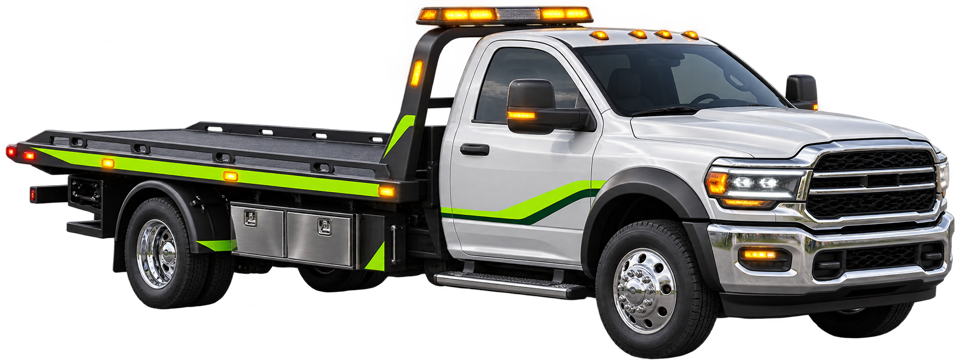
Explain why a flatbed is requested
Tell the operator about drivetrain concerns, collision damage, low ground clearance, a specialty vehicle, locked wheels, or a preference for all-wheels-up transport. The actual condition determines whether a carrier is appropriate.
Measure the usable space
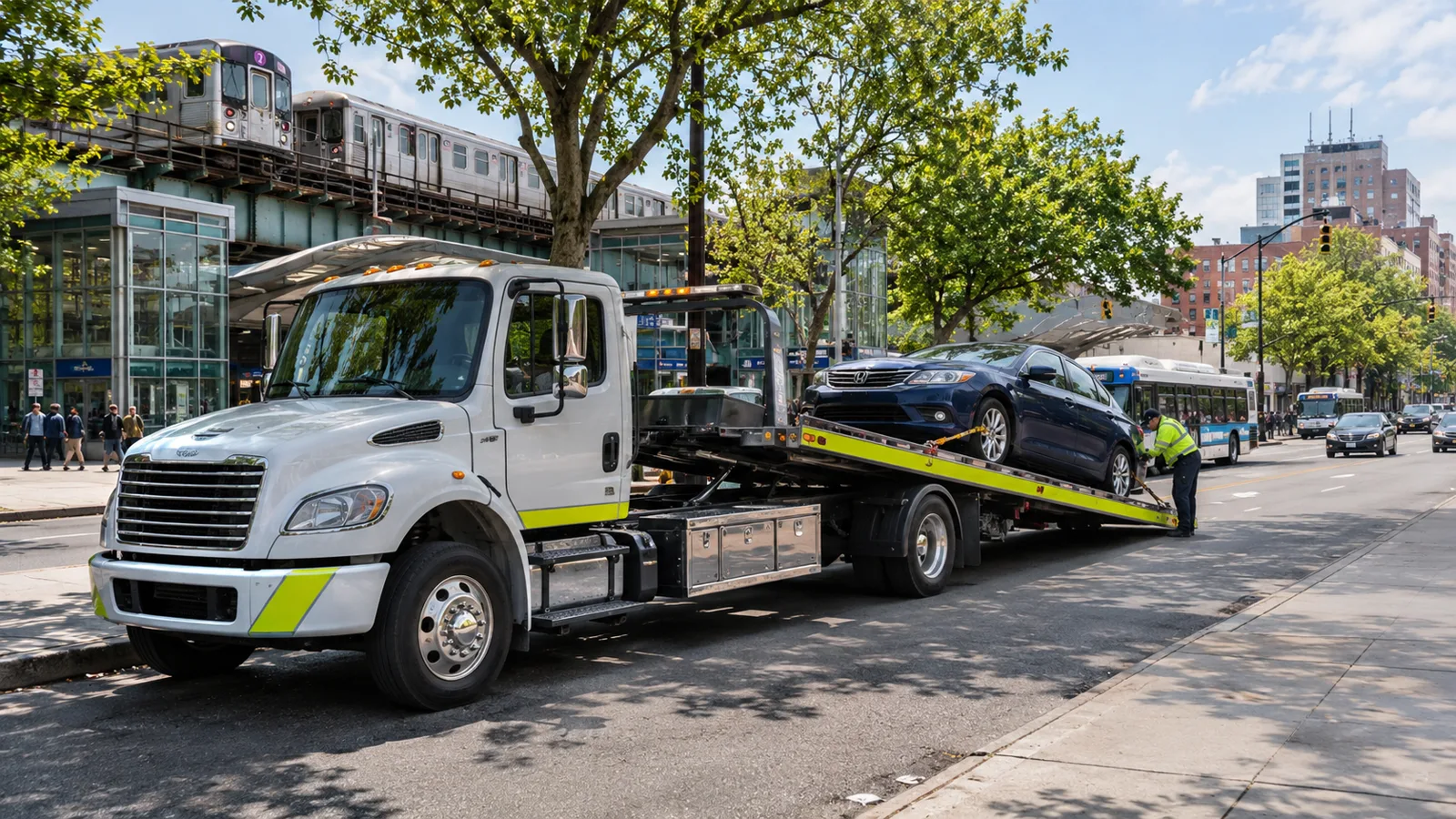
A flatbed extends behind the truck while loading. Narrow streets, parked cars, steep grades, low garages, loading zones, and active traffic may require a safer meeting or staging point.
Confirm securement and delivery
State whether the car rolls, steers, brakes, and has accessible recovery points. Verify the receiving address, loading plan, mileage, tolls, and total quote before the move begins.
Check the loading footprint
A carrier needs room to lower its bed and align with the vehicle. Mention blocked curb space, narrow lanes, steep ramps, low garages, active bus stops, or double-parked traffic before dispatch. Low bodywork, damaged suspension, and non-rolling wheels can also change the plan.
Have these details ready
- Car and drivetrain details
- Loading room and clearance
- Wheel and steering condition
- Transport and delivery quote
Call (800) 311-5593 for a new request. Availability, equipment, timing, and the final quote are confirmed before dispatch.